Londona Serif Font for Handmade Labels & Printables
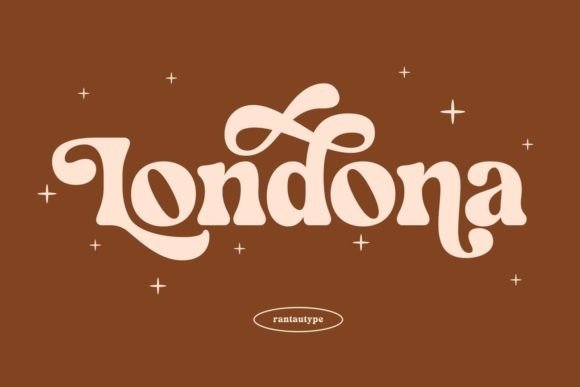
If you’ve ever held a vintage apothecary bottle, admired a hand-lettered café sign from the 1950s, or flipped through a well-loved wedding invitation suite with timeless charm—you’ll instantly recognize the quiet confidence of Londona. This isn’t just another retro serif font. It’s a thoughtfully crafted typeface that balances boldness and elegance, with sturdy serifs, open counters, and generous spacing that keeps every letter legible—even at small sizes. As someone who designs printable wall art, cuts vinyl for boutique tags, and prints hundreds of greeting cards each season, I reach for Londona when I need a font that feels both nostalgic and unmistakably professional.
What makes Londona especially valuable for crafters is how it performs across real-world product applications. Its strong x-height and clean stroke contrast mean it cuts cleanly on Cricut and Silhouette machines—no fuzzy edges on delicate sticker outlines or tiny candle labels. On matte paper stock, it holds its shape beautifully; on kraft tags or linen wedding invites, it adds warmth without sacrificing clarity. And because it’s designed as a display serif font—not meant for body text—it shines brightest where attention matters most: headlines, names, titles, and short decorative phrases.
Think about your best-selling products right now. That lavender-scented soy candle? Try Londona on the front label—paired with a subtle handwritten script for the scent name (“Lavender & Rain”) and a clean sans serif for ingredients and net weight. Your holiday market booth signage? Use Londona for “Hand-Poured • Small Batch • Made in Portland” above a minimalist wreath graphic. A printable planner cover? Layer Londona in deep navy over cream textured paper, then add gold foil accents in mockup previews—it reads like luxury, not DIY.
Londona also works exceptionally well for seasonal and sentimental projects. I used it last fall for a set of farmhouse-style “Harvest Blessings” printable wall art, and customers specifically mentioned how “warm and inviting” the typography felt. For wedding stationery, it anchors welcome signs and menu boards with quiet authority—especially when paired with a flowing script for names and a crisp sans serif for times and locations. Even digital downloads benefit: my “Vintage Tea Party” planner bundle uses Londona for section headers, giving the whole file a cohesive, curated aesthetic that stands out in crowded Etsy search results.
Readability is where Londona truly earns its place in your design toolkit. Unlike some ornate serifs that blur at 12pt, Londona remains sharp down to 8pt on printed product tags and 10pt on iron-on transfers for tote bags. Its letterforms avoid excessive flourishes, so there’s no risk of letters merging during vinyl cutting or ink bleeding on uncoated cardstock. When testing mockups, I always preview at 75% zoom—this mimics how customers view digital listings—and Londona stays crisp and intentional every time.
Font pairing is intuitive with Londona. For contrast and balance, I often pair it with a relaxed handwritten font (like a soft chalk-style script) for personal touches—think “Est. 2021” beneath a shop logo—or a friendly, neutral sans serif (think Montserrat or Poppins) for supporting text. If you're designing SVG files for layered cutting projects, try stacking Londona for the main phrase and a lighter-weight sans for subtext—it creates visual hierarchy without competing energy. And while Londona itself is a single-weight display serif, its clean structure means it pairs surprisingly well with other serifs too—just keep contrast in mind (e.g., a delicate Didone with Londona’s sturdy stance).
You’ll want to check what’s included in your Londona purchase: most versions come with standard OpenType features like stylistic alternates and ligatures—great for swapping in more elegant ‘&’ symbols or refined lowercase ‘f’ connections on invitations. Some bundles include multilingual support (extended Latin characters), which matters if you sell globally or create bilingual baby shower printables. File formats typically cover OTF, TTF, and web-ready WOFF—so whether you’re prepping Canva templates, Adobe Illustrator SVGs, or Procreate lettering guides, you’re covered.
One practical note many crafters overlook: commercial licensing. Londona is a premium font built for real business use—but always verify the license covers physical product sales (like mugs, shirts, and packaged goods), digital downloads (printables, Canva templates, SVG bundles), and client work (if you design logos or packaging for others). Reputable sellers clearly state this upfront. Using an unlicensed font—even unintentionally—can lead to takedowns or lost sales, especially on platforms like Etsy that scan for intellectual property issues. With Londona’s proper commercial license, you’re free to use it on everything from laser-cut wooden coasters to Instagram story templates sold in your digital shop.
Ultimately, Londona does something rare for a display serif: it feels personal without being precious, bold without being loud, and nostalgic without seeming dated. It doesn’t shout—it invites. That’s why it works so well on a handmade soap label tucked into a gift box, on a framed quote hanging in a nursery, or on the cover of a best-selling digital habit tracker. In a marketplace flooded with trendy fonts that fade fast, Londona carries staying power—the kind that builds brand recognition across seasons, collections, and customer touchpoints. Keep it in your core font folder. Reach for it when you want your product to say, “This was made with care—and designed to last.”